Red rock evening
Light in Sedona has a way of flattening time and making every late-afternoon decision feel pre-edited. This piece is about waiting for that effect without letting the location do all the thinking for you.
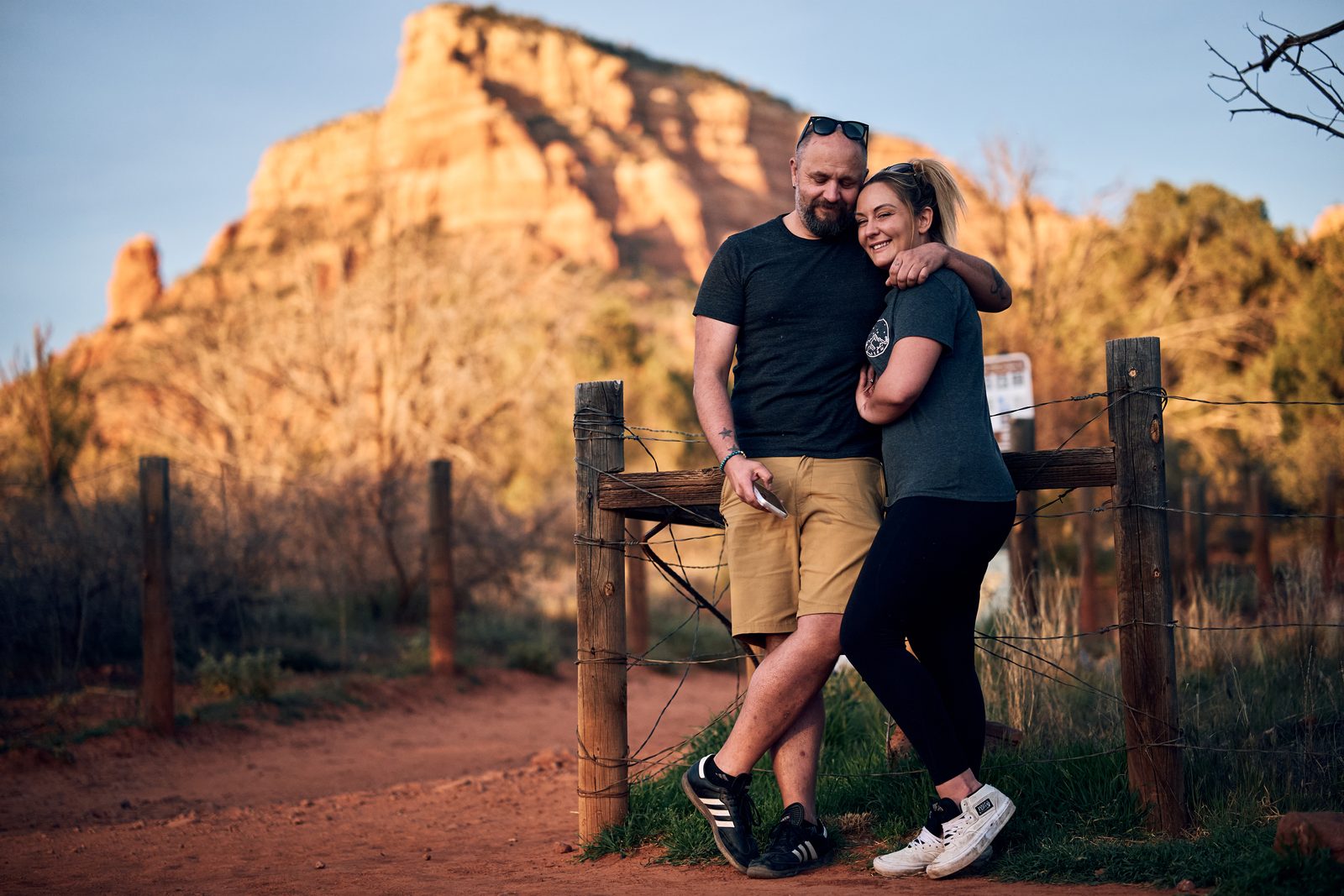
Sedona is one of those places that looks overdirected in photographs until you get there and realize the place really does insist on that level of composition.
The problem is that a location that strong can turn a photographer lazy very quickly. Everything already looks finished. Every turn in the road offers the possibility of another competent frame. Competent is a dangerous category when you are trying not to make souvenirs for people who were never there.
We got in late enough that the light had started doing what it does best: stripping away excess detail and making the rock feel less geological than theatrical. The desert around town goes quiet at exactly the hour when the images start becoming plausible.
I was carrying the usual Fujifilm road setup, one body and two lenses, which is mostly a strategy for preventing myself from solving boredom with more gear. Constraints improve taste faster than options do. The frame came from standing still longer than was convenient and refusing to talk while the light settled.
We found a fence line and used it for scale. Neither of us felt especially interested in making a classic portrait, which helped. The picture became less about being photographed in Sedona and more about standing inside a landscape that already had its own ego.
Color mattered here. I am not doctrinaire about black and white, but I am suspicious of people who use it as a moral category. In this case the orange-red light was the point, and stripping it out would have turned a specific scene into a generalized mood.